
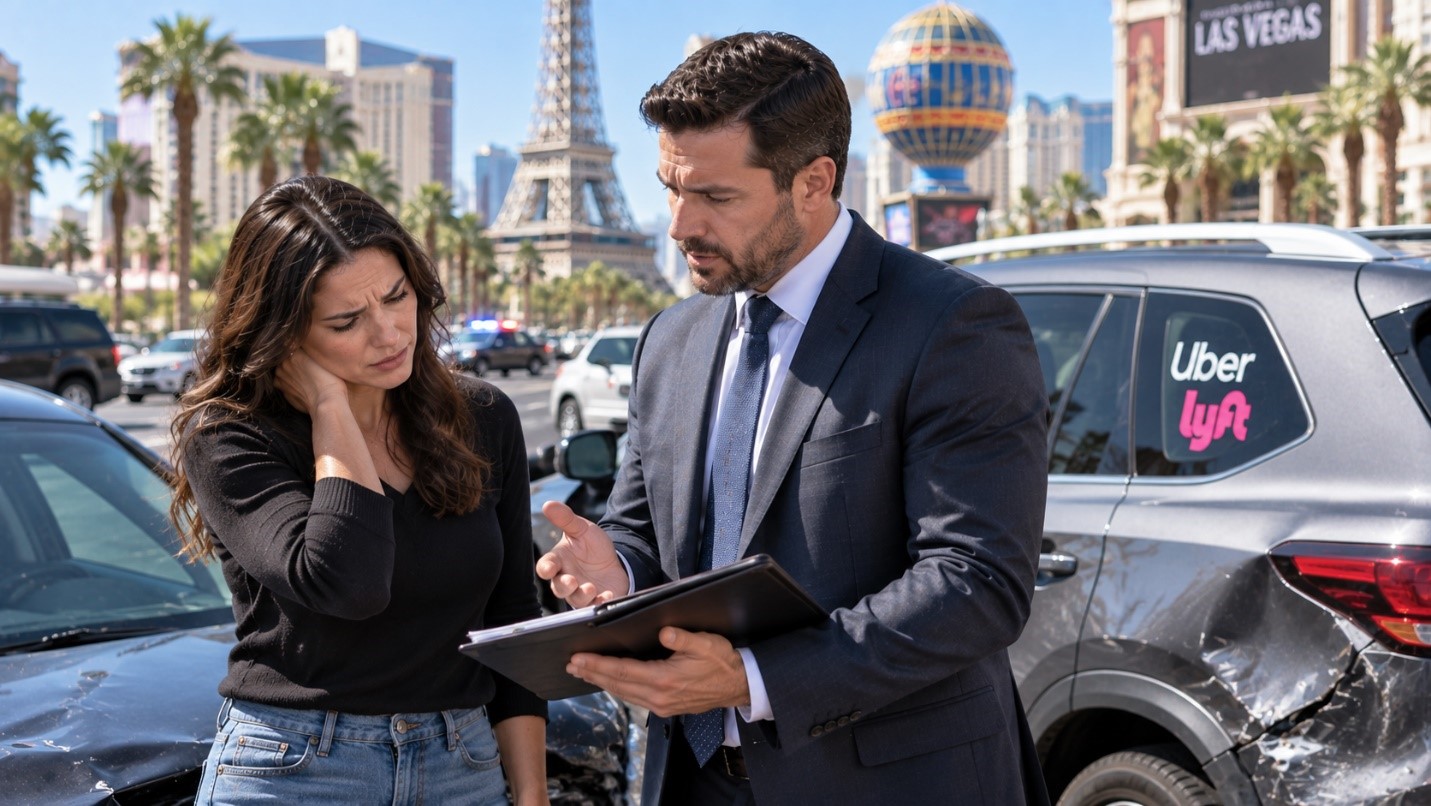
Who pays after a Las Vegas rideshare crash depends on what the driver’s app was doing at the moment of impact, since Uber and Lyft carry different insurance coverage for offline, waiting, and active-trip periods. Anchor Law’s rideshare accident attorneys identify which policy applies to your crash, and a free consultation can walk you through your options as a passenger, driver, or the other motorist.
Why Rideshare Accidents Are More Complicated Than Ordinary Crashes
A crash involving an Uber or Lyft driver on the Strip or anywhere else in Las Vegas triggers a layered insurance puzzle that does not exist in a typical two-car collision. Rather than dealing with a single driver and a single insurance policy, you may be navigating the rideshare driver’s personal auto policy, the rideshare company’s contingent liability coverage, and its much larger commercial policy, depending entirely on what the driver’s app was doing in the seconds before impact. Sorting out which coverage applies, and forcing the correct insurer to pay, is often the single biggest obstacle to a fair settlement.
The Three Insurance Periods That Determine Who Pays
- App off: the driver’s personal auto insurance is the only coverage available, just like any other driver
- App on, waiting for a ride request: the rideshare company provides limited contingent liability coverage
- App on, en route to pickup or during an active trip: up to $1 million in liability coverage typically applies
What If You Were a Passenger in the Uber or Lyft?
If you were injured as a passenger during an active trip, you are generally covered under the rideshare company’s $1 million commercial liability policy, regardless of which driver, yours or another motorist, caused the crash. That said, insurers routinely dispute injury severity, delay claims, or pressure injured passengers into fast, lowball settlements before the full extent of medical treatment is even known. Our rideshare accident attorneys handle the claims process so you are not negotiating directly with a multi-billion dollar company’s insurance team on your own.
What If You Were Hit By a Rideshare Driver in Another Car?
If an Uber or Lyft driver hit your vehicle, or if you were a pedestrian or bicyclist struck by one, your claim depends heavily on proving what the app showed at the exact moment of the crash. Rideshare companies and their insurers often argue the driver was momentarily offline or between trips to shift responsibility onto a smaller personal policy, which makes obtaining the driver’s trip data early in the process critical to a fair recovery.
What If You Were the Rideshare Driver Yourself?
Drivers who work for Uber or Lyft face their own complications after a crash, since a personal auto policy frequently excludes coverage for any accident that happens while the driver is logged into a rideshare app, even if no passenger was in the car yet. Nevada’s modified comparative negligence rule still applies to drivers just as it does to any other motorist, and a driver injured by another negligent driver, whether or not a passenger was present, may still have a claim against that at-fault party in addition to whatever rideshare coverage applies.
How Nevada’s Rideshare Insurance Requirements Came to Be
Nevada lawmakers created a specific regulatory framework for transportation network companies like Uber and Lyft, requiring them to carry substantially more liability coverage than an ordinary personal auto policy once a driver accepts a ride request. This framework exists precisely because lawmakers recognized that a driver ferrying paying passengers around the Strip and greater Las Vegas presents different risks than an everyday commuter, and it is why the specific insurance period at the moment of your crash carries so much legal weight.
Tourists who rely heavily on rideshare apps to get between resorts, the airport, and the Strip often assume any accident during their trip is automatically covered by the rideshare company’s full policy, but that is only true during an active trip or en route to a pickup. Knowing this distinction before you ever need it can help you preserve the right evidence, such as a screenshot of your app status, in the confusing minutes right after a crash.
What About Accidents Involving Multiple Vehicles and a Rideshare Car?
When a rideshare vehicle is one of several cars involved in a chain-reaction crash, such as a pileup near a Strip resort entrance, sorting out liability requires layering ordinary comparative negligence analysis on top of the rideshare insurance puzzle. Each driver’s individual fault percentage still applies, but the specific policy responsible for paying an at-fault rideshare driver’s share depends entirely on what the app showed at that exact moment, which is one more reason these cases benefit from an attorney who handles both areas together.
These layered cases often involve negotiating with several different insurance companies at once, each one hoping another carrier absorbs the largest share of the payout. Keeping track of every policy, every adjuster, and every deadline across multiple insurers is a significant undertaking for an injured victim to manage alone while also recovering from a serious injury.
What Compensation Is Available After a Las Vegas Rideshare Accident?
Whether you were a passenger, a driver, or someone struck by a rideshare vehicle, the compensation available in a Nevada rideshare claim generally mirrors any other serious car accident case, adjusted for the specific insurance policy that ends up responding to your claim.
- Emergency treatment, hospitalization, surgery, and ongoing rehabilitation costs
- Lost income for passengers, drivers, or other motorists unable to work during recovery
- Pain, suffering, and diminished quality of life following a serious injury
- Property damage to a personal vehicle involved in the crash
How Long Do You Have to File a Rideshare Accident Claim in Nevada?
Rideshare accident claims generally follow Nevada’s standard two-year statute of limitations for personal injury cases, but the insurance investigation itself often needs to move faster than that deadline suggests. Trip data, driver app logs, and GPS records are maintained by Uber and Lyft according to their own internal retention policies, and requesting that information promptly, before it can be routinely purged, is essential to proving which insurance period applies to your crash.
What to Do If Uber or Lyft Disputes Your Claim
Uber and Lyft both maintain large third-party claims administrators whose job is to investigate and often minimize payouts on the company’s behalf, and it is common for these administrators to request extensive documentation, delay responses for weeks, or dispute which insurance period actually applies to your crash. A denial or lowball offer from a rideshare company’s claims administrator is rarely the final word, and pushing back with a clear evidentiary record of the driver’s app status often results in a significantly improved outcome.
Rideshare accidents involving a driver who was impaired, distracted by texting, or driving while fatigued from an overnight shift add an additional layer of potential liability, since that conduct may support a claim for punitive damages on top of standard compensation. Documenting any signs of impairment or distraction at the scene, and requesting toxicology results from the police report when available, can meaningfully strengthen a claim against a negligent rideshare driver.
Common Causes of Rideshare Accidents on the Strip
- Drivers glancing at GPS navigation or the rideshare app while merging in heavy Strip traffic
- Sudden stops or unsafe pickups and drop-offs in active traffic lanes
- Fatigue from long shifts, since many drivers work extended hours to maximize earnings
- Unfamiliarity with Las Vegas traffic patterns among drivers new to the area or visiting from out of town
Steps to Take After a Las Vegas Uber or Lyft Accident
- Take a screenshot of your trip details, driver information, and route within the app immediately
- Seek medical attention and document all injuries, even ones that seem minor at first
- Photograph the vehicles, the scene, and any visible damage before anyone leaves
- Report the crash through the Uber or Lyft app in addition to a standard police report
- Avoid accepting a settlement offer before an attorney has reviewed which insurance period applies
Why You Need a Las Vegas Rideshare Accident Lawyer
Between the driver’s personal insurer, the rideshare company’s commercial carrier, and sometimes a third negligent driver, rideshare accident claims involve more moving parts than most injured victims expect to manage alone. Anchor Law identifies every applicable policy and pursues each one for maximum compensation, on a contingency-fee basis with no upfront cost to you.
Schedule a free consultation today to find out who is actually responsible for your Las Vegas rideshare accident.