
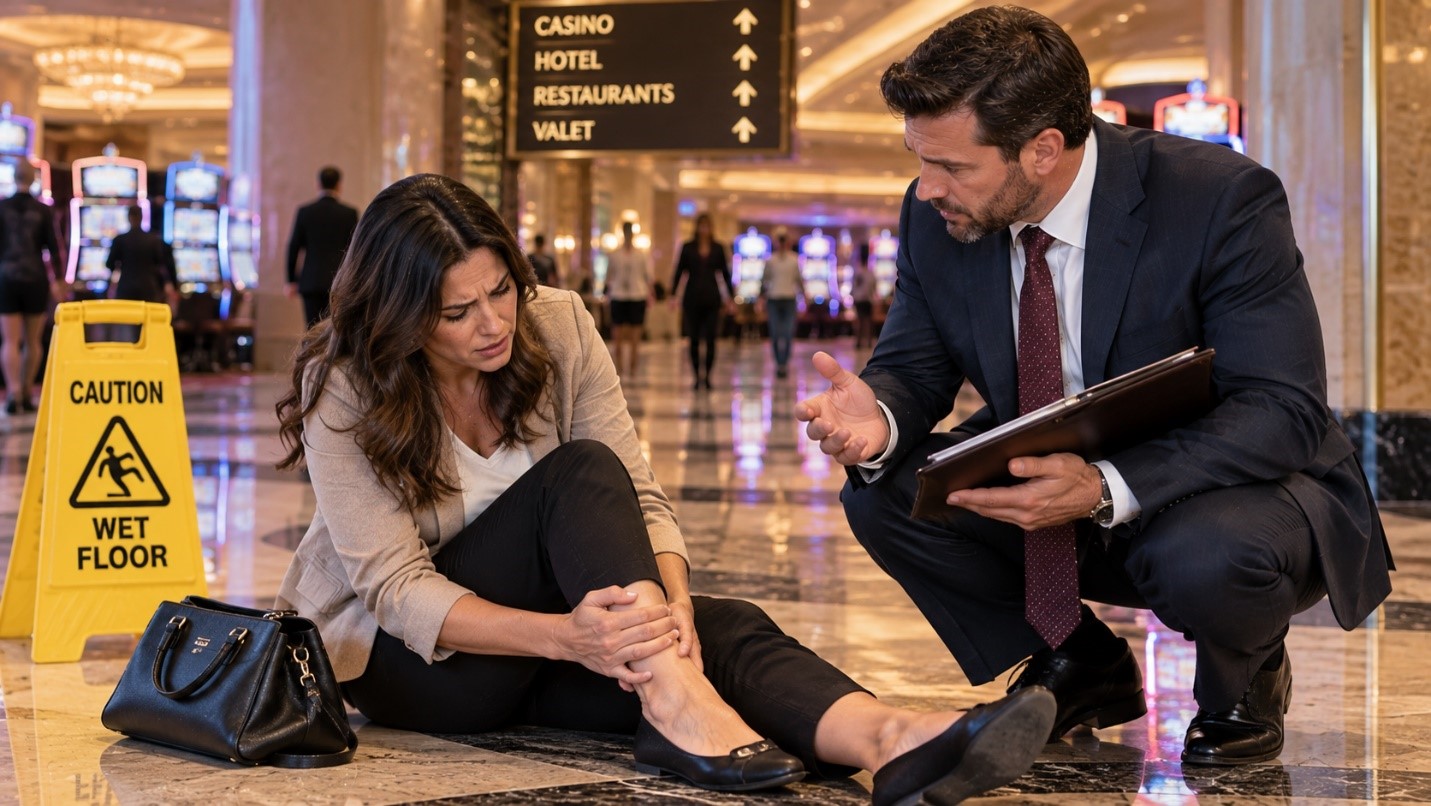
Casinos and hotels owe visitors a duty to keep floors, walkways, and stairwells free of hazards, and a slip and fall on their property can support a premises liability claim if the resort knew, or should have known, about the danger. Anchor Law’s premises liability attorneys gather surveillance footage and maintenance logs before they disappear, and a free case review can tell you whether your fall qualifies.
Do Resorts Owe a Duty of Care to Visitors?
Las Vegas casinos and hotels invite millions of visitors through their doors every year, and Nevada premises liability law holds them to a high standard of care in exchange for that steady stream of paying guests. Resort operators must regularly inspect gaming floors, buffet areas, pool decks, parking garages, and guest room hallways for spills, uneven flooring, loose carpeting, and other hazards, and they must either fix known dangers promptly or warn visitors clearly until the hazard is resolved. When a property fails to meet that standard and a guest is injured as a result, the resort can be held financially responsible under Nevada law.
Common Causes of Slip and Fall Injuries on the Strip
- Spilled drinks left unattended near bars, buffets, and gaming tables
- Wet floors near pool decks, fountains, or entrances during rain, left without warning signs
- Torn, bunched, or poorly maintained casino carpeting in high-traffic walkways
- Uneven transitions between marble, tile, and carpet common in resort architecture
- Poor lighting in parking garages, stairwells, and back-of-house employee corridors
What You Must Prove in a Las Vegas Premises Liability Claim
Simply falling on resort property is not enough to win a claim. Nevada law requires you to show the property owner knew, or reasonably should have known, about the hazardous condition and failed to fix it or warn guests within a reasonable amount of time. This is often the most contested part of any casino or hotel slip and fall case, since resorts routinely argue the spill or hazard appeared only moments before you fell, leaving no realistic opportunity to respond.
Resort operators keep detailed housekeeping and maintenance logs showing when floors were last inspected, mopped, or checked before your fall, and those internal records often reveal exactly how long a hazard was actually present, sometimes far longer than the property is willing to admit. A documented gap between the last recorded inspection and the time of your fall can be the single most important piece of evidence in the entire case.
Who Can Be Held Responsible Besides the Resort Itself
Large Las Vegas properties are often operated through a web of corporate entities, third-party janitorial contractors, valet companies, and independent vendors leasing space inside the resort, such as restaurants or retail shops. Depending on where and how your fall occurred, liability may extend beyond the resort’s parent company to include the specific contractor responsible for maintaining that area, which is why a thorough investigation into who actually controlled the hazardous space matters as much as identifying the resort itself.
Falls that happen in employee-only corridors, loading docks, or back-of-house areas accessible to contracted vendors or delivery staff raise similar questions, since the resort may argue a third-party contractor, rather than its own housekeeping staff, was responsible for that specific space at the time of your fall. Identifying every party with a maintenance obligation for the exact location of your fall is often necessary to secure full compensation.
Typical Injuries From Casino and Hotel Falls
Marble, polished tile, and stone flooring are common throughout Las Vegas resorts because they photograph beautifully, but they also offer little forgiveness when a guest falls, which is part of why resort slip and fall injuries tend to be more severe than falls on carpeted or softer flooring elsewhere.
- Hip fractures and other broken bones, especially common among older guests
- Traumatic brain injuries and concussions from striking marble or tile flooring
- Herniated discs and other spinal injuries from awkward landings
- Torn ligaments, sprains, and soft tissue injuries requiring extended physical therapy
How Long Do You Have to File a Premises Liability Claim in Nevada?
Nevada generally allows two years from the date of your fall to file a premises liability lawsuit, but resorts and their insurers often use the early weeks after an incident to gather statements and lock in a narrative favorable to the property before an injured guest has even retained an attorney. Reporting the fall and seeking legal guidance promptly helps preserve surveillance footage, staffing records, and maintenance logs long before that two-year window closes.
This deadline applies whether you live in Las Vegas year-round or were only in town for a weekend trip, and it does not pause simply because you have returned home to another state. Out-of-state visitors sometimes assume a Nevada filing deadline works differently for them, which is not the case, making it just as important for a tourist to act promptly as it is for a local resident.
Why Casino Surveillance Footage Disappears Fast
Nearly every inch of a Las Vegas casino floor is covered by surveillance cameras, which can either make or break your claim depending on how quickly that footage is preserved. Most properties only retain video for a limited number of days before it is automatically overwritten, and resort security teams are not required to volunteer footage that hurts their own case. Our slip and fall attorneys send preservation letters immediately after you contact us, demanding the property secure all relevant footage, incident reports, and maintenance logs before they can be lost or deleted.
Comparative Negligence and ‘Open and Obvious’ Defenses
Resorts and their insurers frequently argue that a hazard was ‘open and obvious,’ meaning a reasonably careful guest should have noticed and avoided it, or that you were distracted by your phone, drinks, or surroundings. Nevada’s modified comparative negligence rule still allows you to recover compensation as long as you are found less than 51 percent at fault, but a strong defense strategy from the resort can meaningfully reduce your settlement if it goes unanswered, which is exactly why an experienced advocate matters from the very beginning of your claim.
How Resort Insurance Adjusters Try to Minimize Your Claim
Casinos and hotels are covered by large commercial general liability policies, and the adjusters who handle these claims work with the resort’s own risk management team, security staff, and outside defense counsel from the moment an incident report is filed. It is common for a resort representative to check on you at the scene, express sympathy, and even offer complimentary services, while quietly documenting statements that can later be used to argue you were distracted, wearing inappropriate footwear, or otherwise responsible for your own fall.
Common Mistakes That Hurt a Slip and Fall Claim at a Resort
- Accepting a small on-the-spot offer of comped rooms or credits in exchange for not filing a report
- Posting about the fall or your injuries on social media before your claim is resolved
- Waiting several days to seek medical treatment, which insurers use to question the injury
- Giving a recorded statement to the resort’s insurer without first speaking to an attorney
Steps to Protect a Slip and Fall Claim at a Casino or Hotel
- Report the fall to hotel or casino security immediately and request a written incident report
- Photograph the hazard, the surrounding area, and your injuries before anything is cleaned up
- Get the names and contact information of any witnesses nearby
- Seek medical treatment the same day, even if your injuries seem minor at first
- Avoid giving a recorded statement to the resort’s insurance company without legal advice
Why You Need a Las Vegas Premises Liability Lawyer Against a Resort
Major Las Vegas resorts have in-house security teams, corporate insurers, and defense attorneys ready to respond to a slip and fall claim within hours, which puts an injured guest at an immediate disadvantage without equally aggressive representation. Anchor Law moves just as quickly, securing evidence and building your case before it can disappear.
Tourists injured while visiting from out of state face an additional challenge, since they often have to return home long before their claim is resolved and may worry that distance will weaken their case. Our firm handles evidence gathering, medical record requests, and negotiations locally in Las Vegas, so you can focus on recovering at home while your claim continues to move forward here.
There is no fee unless we win your case, so reach out for a free consultation as soon as possible after a fall on Las Vegas resort property.