
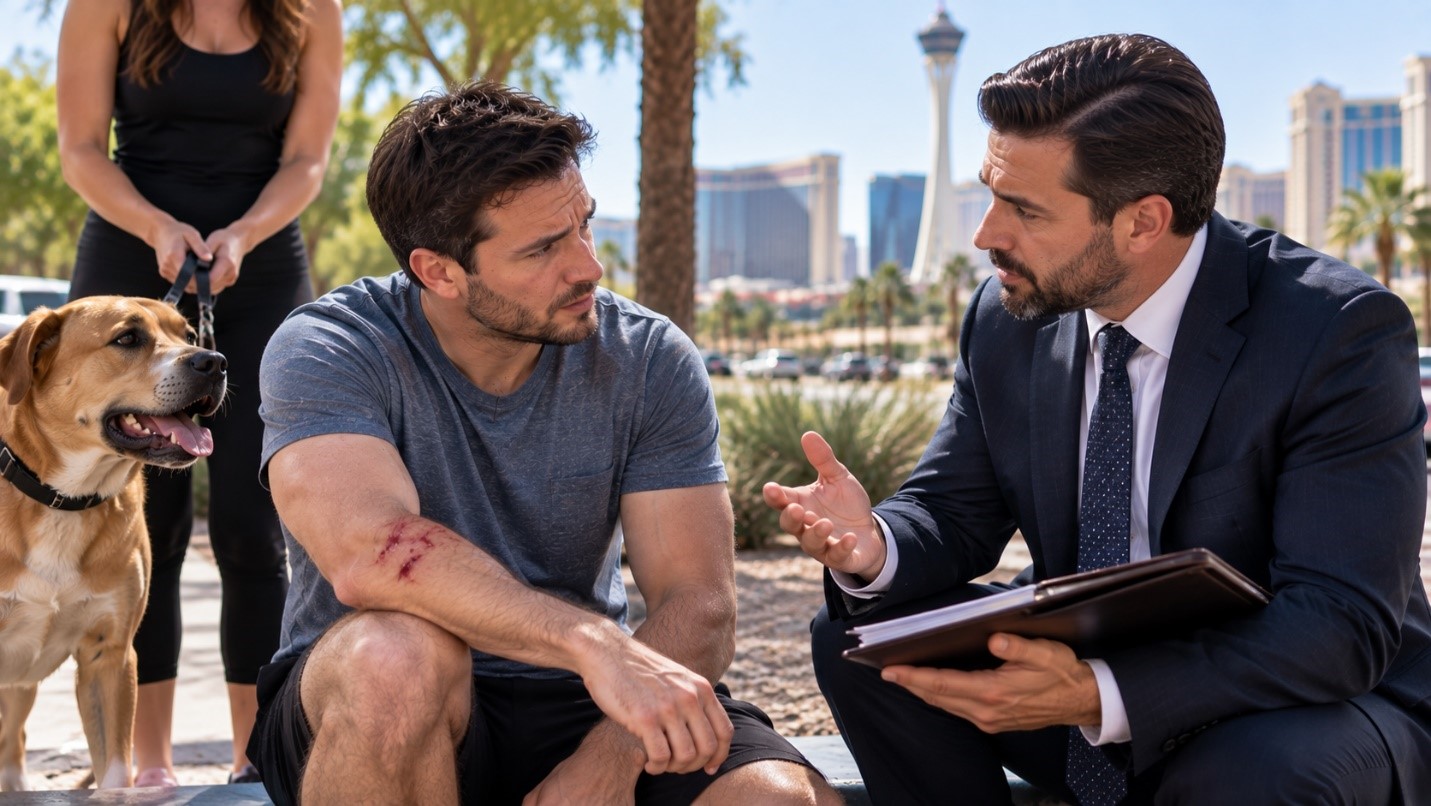
Nevada follows a modified one-bite rule for dog bite claims, meaning owners are not automatically liable for a first bite unless they knew the dog was dangerous or violated a leash or containment law. Anchor Law's dog bite attorneys investigate prior incidents and local ordinances to prove liability, and a free consultation can clarify your options after a Las Vegas dog attack.
Does Nevada Have a 'One Bite' Rule?
Nevada is often described as a 'one bite' state, but that label is misleading and can cost injured victims real compensation if they take it at face value. Under Nevada common law, a dog owner can be held liable for injuries if they knew, or reasonably should have known, that their dog had dangerous or vicious tendencies, whether from a prior bite, aggressive behavior, or warnings from a veterinarian or animal control. This means an owner does not get an automatic free pass just because their dog never bit anyone before; if there were warning signs and the owner ignored them, liability can still attach to that very first bite.
This distinction matters enormously for injured victims, because it shifts the legal question away from 'has this dog bitten before' and toward 'did the owner know, or should they have known, this dog posed a risk.' Prior growling, snapping, lunging at fences, or a documented history of aggressive behavior can all support a claim even on a technically first bite.
When Is a Dog Owner Liable Under Nevada and Clark County Law
Beyond the 'one bite' common law standard, Las Vegas and Clark County have adopted local ordinances that create additional layers of liability. Owners can be cited and held civilly responsible for violations such as failing to restrain a dog, allowing it to run at large, or ignoring a prior 'dangerous dog' designation from animal control. When a violation of one of these ordinances contributed to your attack, proving negligence becomes considerably more straightforward, since the owner's own violation of local law can serve as strong evidence of fault.
Leash Laws and Strict Liability in Las Vegas
Clark County requires dogs to be leashed or otherwise physically restrained whenever they are off the owner's property, and many Las Vegas neighborhoods and HOAs impose additional containment rules. When a dog escapes a yard, slips a leash, or is allowed to roam free in violation of these rules, the owner's failure to comply can support a stronger claim, even if the dog had never shown aggression before. Our dog bite attorneys routinely pull animal control records and prior complaint histories to establish this pattern.
Renters and homeowners insurance policies frequently include liability coverage for dog bites, which is often the actual source of any compensation you recover, not the owner's personal bank account. Identifying every applicable policy, including a landlord's coverage when a dog was kept on rental property in violation of a lease, is a key part of building a full recovery for a serious bite injury.
Dangerous Dog Designations and Repeat Offender Rules
Clark County Animal Protection Services maintains a formal process for designating a dog as 'dangerous' or 'vicious' after a documented bite or aggressive incident, and once that designation is issued, the owner faces stricter containment, registration, and insurance requirements going forward. If an owner ignored a dangerous dog designation, failed to comply with a required enclosure, or continued to walk the dog off leash after a prior citation, that history becomes powerful evidence in your case, since it shows the owner had direct notice from the county itself, not just informal warning signs from neighbors.
Does the Breed of the Dog Affect Your Claim?
Nevada law does not create automatic liability based on breed alone, and Las Vegas does not maintain a breed-specific ban the way some cities do. This means liability turns on the individual dog's documented history and the owner's conduct, not on stereotypes about any particular breed. Insurance companies sometimes try to use breed as a shortcut to argue a bite was foreseeable or unforeseeable, but a thorough investigation into the specific animal's actual behavior history carries far more legal weight than breed alone.
How Nevada Compares to Strict Liability Dog Bite States
Some states impose strict liability on dog owners for any bite, regardless of the animal's history, which can make those claims more straightforward to prove. Nevada's modified one-bite approach means an injured victim generally has to show the owner had some form of prior notice, through a previous incident, a violation of a leash or containment law, or a dangerous dog designation, which makes early, thorough investigation into the dog's background a bigger part of building a Nevada claim than it would be in a strict liability jurisdiction.
How Long Do You Have to File a Nevada Dog Bite Claim?
Dog bite injury claims in Nevada generally fall under the same two-year statute of limitations that applies to most personal injury cases, running from the date of the attack. Claims involving a minor may have different timing considerations, and cases involving a government-owned or leashed animal in a public park can carry shorter notice deadlines, so confirming your exact filing window early protects your family's ability to recover compensation.
What If the Dog Bite Happened on Someone Else's Property?
Many Las Vegas dog bites happen at a friend's house, a rental property, an apartment complex courtyard, or a public park rather than on the owner's own property, and each setting can add another potentially liable party to your claim. A landlord who knew a tenant kept an aggressive dog in violation of a no-pets or breed-restriction clause in the lease, or an apartment complex that failed to enforce its own posted leash rules in common areas, may share responsibility alongside the dog's owner for a resulting attack.
How Nevada Handles a Dog With Multiple Prior Incidents
When animal control records show a pattern of prior complaints, near-miss incidents, or previous bites involving the same dog, that history becomes some of the strongest evidence available in a Nevada dog bite claim. Owners who received a formal warning, a citation, or a dangerous dog designation after an earlier incident and still failed to secure the animal are held to a higher standard than a first-time owner with no such history, and insurers are far less able to argue the attack was a sudden, unforeseeable surprise.
Common Defenses Dog Owners and Insurers Raise
- Claiming the victim provoked the dog through teasing, cornering, or reaching over a fence
- Arguing the victim was trespassing on private property at the time of the attack
- Asserting the dog had no prior history of aggression and the bite was unforeseeable
- Blaming a lack of documentation or delayed medical treatment to question the injury's severity
What Compensation Covers After a Las Vegas Dog Bite
Dog bite injuries are often more severe than they first appear, especially when they involve deep puncture wounds, nerve damage, or facial injuries to a child, and the resulting compensation should account for both the immediate medical response and any longer-term treatment a victim may need as they heal.
- Emergency room treatment, stitches, reconstructive surgery, and scar revision procedures
- Rabies testing, quarantine-related costs, and follow-up infection treatment
- Lost wages while you recover from a bite injury or related surgery
- Pain, suffering, and any lasting psychological impact, especially in cases involving children
Steps to Take Immediately After a Dog Attack
- Seek medical attention right away, even for wounds that appear minor at first
- Photograph the injury, the location of the attack, and any visible restraint or containment failure
- Get the dog owner's contact and insurance information, along with any witness details
- Report the bite to animal control so an official record of the incident exists
- Avoid signing anything from an insurance company before speaking with an attorney
Why You Need a Las Vegas Dog Bite Lawyer to Prove Liability
Dog bite claims often turn into a credibility contest between the victim and the owner, especially when there is no independent witness. Anchor Law investigates animal control records, neighborhood complaint histories, and local ordinance violations to build a liability case that does not rely solely on your word against the owner's. Because we handle every case on a contingency-fee basis, there is no cost to find out what your claim may be worth.
Contact us for a free consultation to discuss your Las Vegas dog bite injury today, and let our team determine which laws and local ordinances apply to your specific attack.